

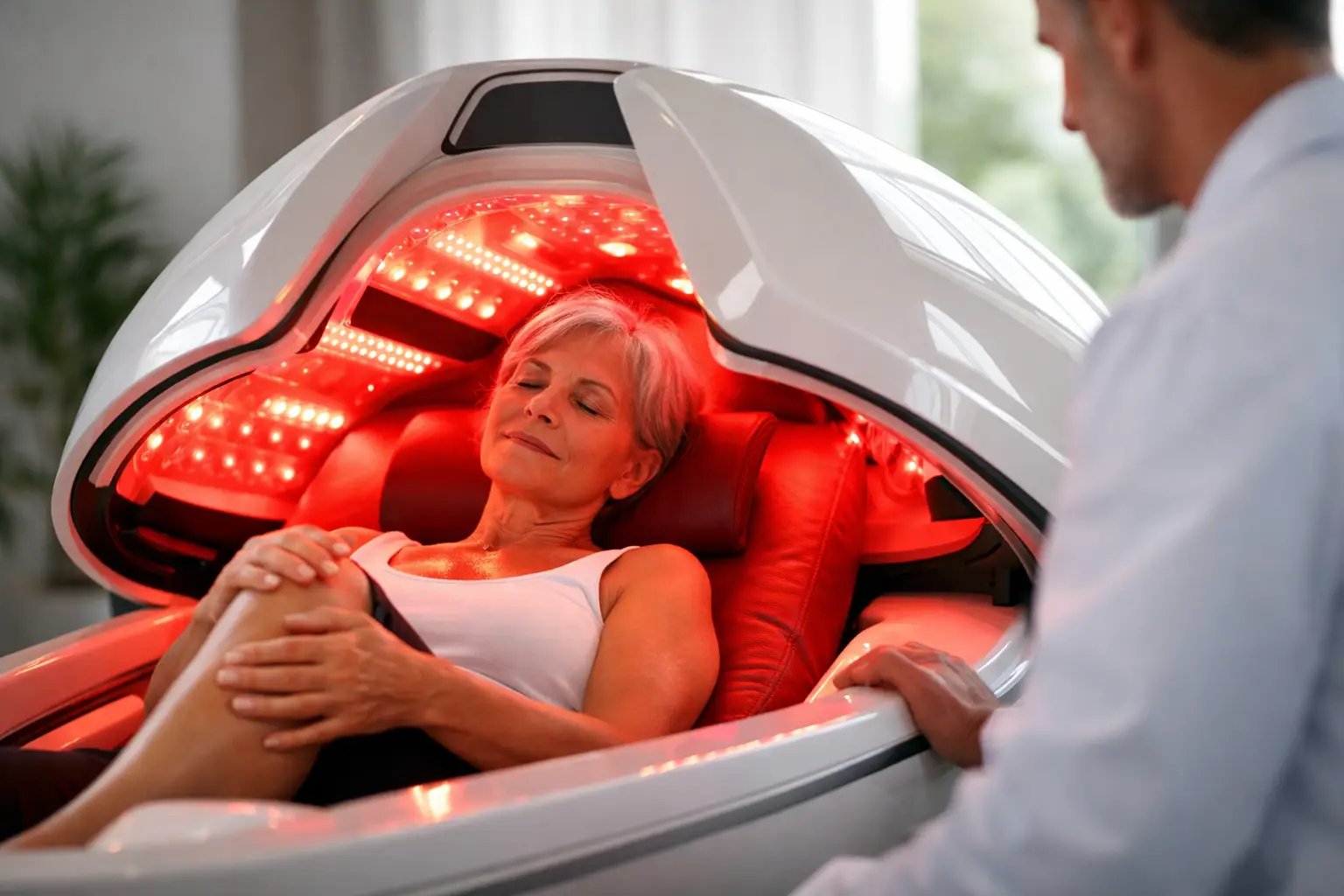
A stiff knee on the stairs, fingers that protest around a coffee cup, hips that take longer to loosen each morning – arthritis can make ordinary movement feel like a negotiation. So, can light therapy help arthritis? For some people, photobiomodulation (PBM), also called red and infrared light therapy, may be a valuable drug-free addition to an arthritis management plan, particularly for reducing pain and supporting day-to-day function.
The key word is addition. Light therapy is not a cure for arthritis, and it should not replace medical advice, prescribed medication, exercise therapy or rheumatology care. Used appropriately, however, it may help create a more comfortable platform for movement, recovery and consistent self-care.
What arthritis pain involves
Arthritis is not one single condition. Osteoarthritis involves changes to joint cartilage and surrounding structures over time, commonly affecting knees, hips, hands and the spine. Rheumatoid arthritis and other inflammatory arthritides are autoimmune conditions in which the immune system drives inflammation in and around joints.
Both can cause pain, stiffness, swelling, reduced range of motion and fatigue, but their causes and treatment needs differ. That distinction matters. A person with osteoarthritis may be working to stay active and manage mechanical joint pain. Someone with rheumatoid arthritis may also need careful medical treatment to control disease activity and protect their joints.
No light-based treatment should delay assessment of a newly swollen, hot or severely painful joint. Sudden symptoms, fever, unexplained weight loss, major loss of function or a flare that is not settling deserve prompt clinical attention.
Can light therapy help arthritis symptoms?
Research into low-level light therapy and PBM suggests it may help some people experience less pain and stiffness, especially when it is used as part of a broader treatment plan. Results are not identical for everyone, and outcomes depend on the type of arthritis, the joint involved, the wavelength and dose of light used, treatment consistency, and the severity of symptoms.
The strongest practical case is often for symptom management. If pain is lower and a joint feels easier to move, it may be more realistic to complete a physiotherapy program, walk regularly, build muscle strength or return to the activities that support long-term joint health.
For osteoarthritis, PBM may be useful for easing discomfort in areas such as the knee or hand. For inflammatory arthritis, it may support comfort alongside medical management, but it does not control the underlying autoimmune disease in the way disease-modifying medicines can. This is an important trade-off to understand: feeling better is valuable, but it is not the same as treating the driver of inflammatory joint damage.
How photobiomodulation works
Photobiomodulation uses specific red and near-infrared wavelengths of light at low, non-heating levels. Unlike surgical lasers, which are designed to cut or ablate tissue, PBM is intended to stimulate biological processes without damaging the skin.
Light energy is absorbed by cellular components, including mitochondria – often described as the energy-producing structures within cells. This interaction may support ATP production, influence oxidative stress and encourage cellular signalling involved in tissue repair and inflammation regulation.
In plain terms, PBM aims to give cells conditions that better support recovery and function. That may influence local circulation, sensitivity in painful tissues and the inflammatory processes around a joint. It is not a magic switch, and it cannot rebuild severely damaged cartilage. Its potential value lies in helping the body manage symptoms and recovery more effectively.
The dose matters. More light is not automatically better. A treatment needs appropriate wavelengths, power, coverage and timing to be useful. That is one reason purpose-built clinical systems and informed treatment planning matter more than simply buying the brightest light device available.
Why whole-body light therapy may appeal to people with arthritis
Arthritis rarely affects life in just one place. A painful knee can alter sleep and walking patterns. Hand pain can change how someone works, cooks or trains. Persistent discomfort can also contribute to stress, low mood and the tiredness that makes healthy routines harder to maintain.
Localised light therapy can be appropriate when one joint is the clear focus. Whole-body PBM offers a different approach: broad exposure that may support multiple areas during the same session, while also targeting recovery, relaxation and general wellbeing. For people managing widespread stiffness, multi-joint osteoarthritis or the fatigue that can accompany chronic pain, that wider format can be particularly practical.
At iRPod, the full-body PBM pod uses 12,000 temperature-controlled red and infrared LED lights during a 30-minute session. This allows clients to receive broad, non-invasive light exposure without the heat or downtime associated with more aggressive treatments. It is a modern wellness therapy designed to work alongside, not compete with, your existing healthcare plan.
What a sensible arthritis treatment plan looks like
The most useful question is not whether light therapy can do everything. It is whether it can make the rest of your plan easier to follow. For many people, the answer becomes clearer after a consistent trial rather than one isolated session.
A practical plan may include PBM sessions alongside strength and mobility work, physiotherapy, healthy sleep habits, appropriate body-weight management where relevant, and medical care. The aim is not to push through sharp pain. It is to improve the conditions that allow you to keep moving with greater confidence.
Many clinics recommend an initial course of sessions, often between four and 12, depending on symptoms and goals. Chronic issues usually require patience. Some people notice a change in comfort or sleep early, while others need several sessions before they can judge whether the therapy is making a meaningful difference.
Keep track of outcomes that matter in real life: how long morning stiffness lasts, whether you can walk further, how your hands feel after work, whether you are relying less on short-term pain relief, or whether sleep is less interrupted. These measures are more useful than expecting a dramatic overnight transformation.
Safety considerations before trying PBM
Red and infrared light therapy is generally regarded as safe when delivered correctly, and it is non-invasive and drug-free. Still, safe treatment starts with an honest health screening. Tell your practitioner about your diagnosis, current medications, recent surgery, implanted devices, skin conditions and any history of light sensitivity.
Extra care may be needed if you take photosensitising medication or have a condition affected by light exposure. People who are pregnant, undergoing cancer treatment, or managing complex medical conditions should seek advice from their treating clinician before beginning. Your eyes should also be protected according to the device and treatment protocol.
Arthritis can coexist with many other health concerns, so individual guidance matters. A credible provider will not promise to cure arthritis, ask you to stop prescribed medication, or suggest that worsening symptoms should be ignored.
Is light therapy worth trying for arthritis?
If you are looking for a non-invasive option to support joint comfort, movement and recovery, light therapy can be worth considering. It may be especially appealing if medication side effects, persistent stiffness or the limits of localised treatments have left you wanting another evidence-informed tool in your routine.
Set realistic expectations. PBM may reduce the burden of symptoms, but arthritis management still works best when it is active, consistent and tailored to the type of arthritis you have. The best result is often not a pain-free life after one session. It is having enough relief to move more freely, sleep more deeply and keep doing the things that help your joints over time.
A considered consultation is a good place to start: discuss your diagnosis, choose measurable goals, and give the therapy enough consistency to show whether it is helping your body move and recover better.