

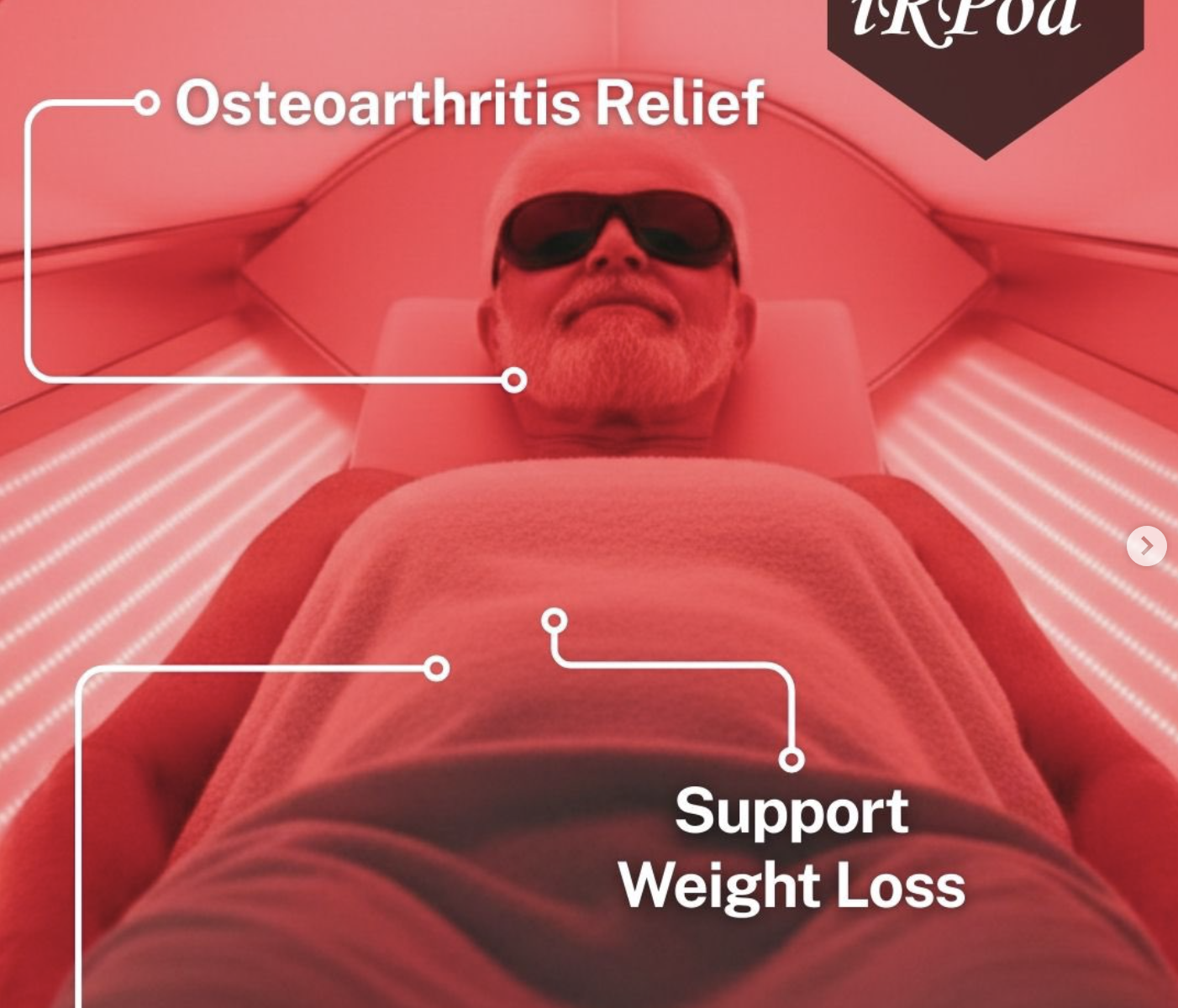
When arthritis flares, it rarely stays neatly in one joint. A sore knee changes how you walk. Stiff hands make work slower. Aching hips can ruin sleep. That is why so many people ask, does red light help arthritis, or is it just another wellness promise with very little behind it?
The short answer is yes, red and near-infrared light therapy may help some people with arthritis by reducing pain, easing stiffness and supporting better movement. But the honest answer is a little more nuanced than that. It is not a cure, it does not rebuild a badly damaged joint overnight, and results depend on the type of arthritis, the severity of symptoms, and how consistently treatment is used.
Does red light help arthritis, and how does it work?
Red light therapy is often discussed under the clinical term photobiomodulation, or PBM. It uses specific wavelengths of red and near-infrared light to interact with cells in a way that supports normal biological function. Rather than heating or burning tissue, the light is absorbed at a cellular level.
The main reason this matters for arthritis is that painful, irritated joints are not only a structural problem. They are also affected by inflammation, poor tissue recovery, muscle guarding and changes in circulation. PBM is thought to support mitochondrial function and ATP production, which helps cells do their repair and maintenance work more efficiently. It may also help modulate inflammatory activity and oxidative stress, both of which are relevant in ongoing joint pain.
That is why people often report benefits that go beyond the joint itself. Less morning stiffness, easier movement, reduced tenderness around the area and better recovery after activity can all make a meaningful difference, even if the underlying arthritis has not disappeared.
What the evidence says about red light for arthritis
The evidence for red light therapy in arthritis is promising, particularly for pain relief and function, but it is not perfectly uniform. Some studies and reviews have shown positive effects in osteoarthritis and rheumatoid arthritis, especially in reducing pain and improving mobility. Others have found more modest results. That variation usually comes down to treatment parameters such as wavelength, dose, frequency and whether the therapy is delivered to a small area or more broadly.
This is where a lot of confusion starts. People hear that red light therapy has research behind it, then buy a weak home device, use it irregularly for five minutes, and assume the whole category does not work. In reality, PBM is very dose dependent. Too little light may do very little. Inconsistent use can also limit outcomes.
For arthritis, the strongest practical takeaway is this: red light therapy is most useful as a supportive treatment. It may help reduce pain, support mobility and improve day-to-day comfort, especially when used as part of a wider management plan that could include movement, strength work, weight management, practitioner advice or medical care where needed.
Which types of arthritis may respond best?
Not all arthritis behaves the same way, so expectations should change with the diagnosis.
Osteoarthritis
Osteoarthritis is the most common form and often involves wear, cartilage breakdown, joint irritation and local inflammation. Red light therapy may be helpful here because it targets some of the factors that drive symptoms, particularly inflammation, stiffness and reduced tissue recovery. Many people with osteoarthritis are not expecting miracles. They simply want to get up from a chair more comfortably, walk further, or wake with less stiffness. Those are exactly the kinds of outcomes PBM may support.
Rheumatoid arthritis
Rheumatoid arthritis is an autoimmune condition, so it is more complex. Red light therapy does not replace medical management, and it should never be framed as a substitute for specialist care. That said, some people with rheumatoid arthritis may still find PBM useful as an adjunct for symptom relief, especially around pain and stiffness in affected joints.
Other inflammatory joint conditions
For psoriatic arthritis and similar inflammatory conditions, the same principle applies. Red light therapy may support symptom management, but it is not a stand-alone answer. The more systemic and medically complex the condition, the more important it is to view PBM as one tool in a broader plan.
What benefits do people usually notice?
The most commonly reported benefit is pain reduction. Sometimes that shows up as lower resting pain. Other times it means the joint is still arthritic, but it becomes less reactive during daily movement.
Stiffness is another major one. People often describe feeling less locked up in the morning or less sore after sitting too long. For busy adults trying to stay active, that can be the difference between avoiding exercise and getting back into a routine.
Mobility may improve as pain and stiffness ease. That does not necessarily mean the joint structure has changed dramatically. It means the body can move with less resistance, less guarding and better tolerance. For many people, that is a very worthwhile outcome.
Some also notice a secondary benefit in sleep and recovery. When pain settles, even slightly, sleep often improves. Better sleep then supports better coping, better healing and better energy. Arthritis management is rarely just about the joint.
Whole-body treatment versus localised treatment
A lot of arthritis treatment is delivered to one sore spot at a time. That can be useful, particularly if a single knee, hand or shoulder is the main problem. But arthritis often does not stay localised. Many people have multiple painful areas, plus fatigue, poor sleep, reduced recovery or general inflammation that affects how they feel day to day.
That is where whole-body photobiomodulation has a distinct advantage. Instead of treating one patch of tissue in isolation, a full-body session exposes a much larger surface area to therapeutic light. For people with widespread stiffness, multiple painful joints or overlapping issues such as fatigue and poor recovery, that broader approach may make more sense.
It is also simply easier to stick with. If someone has sore hands, knees, hips and lower back, treating each area separately can become tedious and inconsistent. A whole-body PBM pod offers a more efficient treatment experience, which matters because consistency is one of the biggest drivers of results.
How long does it take to see results?
This is where expectations need to stay grounded. Some people feel a change quickly, particularly in stiffness and general comfort. Others need a series of sessions before they notice a meaningful shift. Chronic arthritis has usually developed over time, and it often responds best to repeated treatment rather than a one-off visit.
A fair trial usually means multiple sessions over a defined period. The exact number depends on the person, the condition and how their body responds. Early improvements may be subtle at first. Less stiffness when getting out of bed, easier movement after work, or slightly less pain during a walk are all signs the therapy may be helping.
If someone expects one session to erase years of joint pain, they will probably be disappointed. If they are looking for safe, drug-free support that may help them move and feel better over time, red light therapy becomes a far more realistic option.
Is red light therapy safe for arthritis?
For most people, red light therapy is considered low risk and non-invasive when delivered appropriately. It does not involve needles, medication or downtime, which is a major reason many people are drawn to it. That matters for anyone who is tired of stacking pain relief on top of anti-inflammatories and hoping for the best.
Still, safe does not mean casual. The quality of the device, the treatment settings and the clinical judgement behind the therapy all matter. People with complex medical conditions, light sensitivity, active cancer concerns or unusual symptoms should get proper advice before starting.
The strongest clinics position PBM for what it is – an evidence-based supportive therapy with a good safety profile, not a cure-all.
When is it worth trying?
If arthritis is affecting how you move, sleep or function, and you want a non-invasive option that may reduce pain and stiffness, it is worth considering. It may be particularly appealing if you are trying to stay active, reduce reliance on short-term symptom masking, or support recovery without adding another harsh treatment to the mix.
It is probably less compelling if you are expecting a permanent fix from one session or if your arthritis requires urgent medical management that has not been addressed. PBM works best when the goal is improvement, not fantasy.
For people in Melbourne looking for a more advanced approach, iRPod’s whole-body PBM delivery reflects where this category is heading – away from basic spot treatment and towards broader, clinically guided recovery support.
Arthritis can shrink life quietly. You stop walking as far, training as often, sleeping as well, and eventually you start planning around pain. If red light therapy helps you reclaim even part of that ground safely and consistently, that is not a small win. It is a practical step back towards moving well, feeling better and getting more out of your day.