

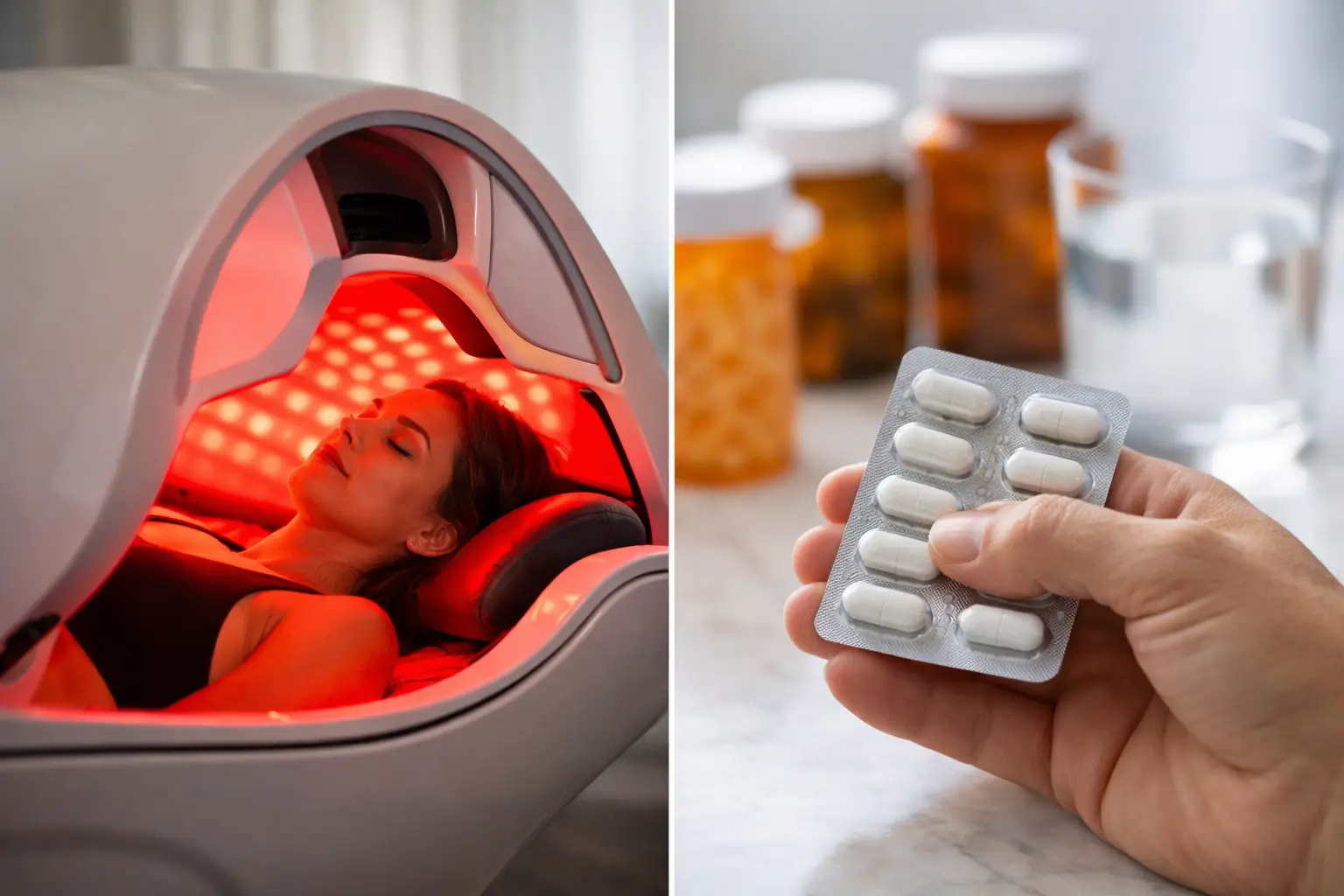
A sore knee that changes how you take the stairs. Neck tension that follows you from desk to bed. Fibromyalgia pain that makes even a good night’s sleep feel out of reach. When pain persists, the real question is not simply whether light therapy vs pain medication is better. It is which approach fits the cause of your pain, your health history and the life you want to get back to.
Medication can be essential, particularly for acute injury, post-surgical pain or inflammatory disease. Yet many Australians are also looking for non-invasive ways to manage symptoms, support recovery and reduce their reliance on medication where clinically appropriate. Photobiomodulation, often called red and infrared light therapy, has become a compelling option in that conversation.
Light Therapy vs Pain Medication: The Core Difference
Pain medicines are designed to alter pain signalling, reduce inflammation or address a specific underlying condition. Depending on the medicine, they may work quickly and can be highly valuable when pain is severe. Common options include paracetamol, anti-inflammatory medicines, topical treatments and prescription medicines. Each has a different role, risk profile and suitability.
Red and infrared light therapy works differently. Photobiomodulation uses specific wavelengths of light to interact with cells, particularly within the mitochondria, where energy is produced. The therapeutic aim is to support cellular energy production, circulation and the body’s natural repair processes. Rather than masking pain alone, PBM is used to support the environment in which recovery can occur.
That distinction matters. A tablet may be the right short-term tool for getting through an acute flare-up. A course of light therapy may be better viewed as a cumulative, drug-free support strategy for people managing persistent discomfort, tissue recovery, training load or fatigue. They are not always competing choices. For many people, the most sensible plan is clinician-guided medication when needed alongside supportive therapies and lifestyle changes.
When Pain Medication Makes Sense
Pain medication should not be treated as a failure or an enemy. It can be an appropriate part of quality medical care. After surgery, for example, effective pain relief can help a person rest, move safely and participate in rehabilitation. For arthritis, migraine, nerve pain and autoimmune conditions, medicines prescribed by a qualified practitioner may be central to managing the condition.
The trade-off is that medicines can bring side effects, interactions and limitations. Anti-inflammatory medications may not be suitable for everyone, especially people with certain kidney, stomach, heart or blood pressure concerns. Stronger prescription pain medicines require especially careful medical oversight because of sedation, constipation, tolerance, dependence and other risks.
Even non-prescription medicines deserve respect. Taking more than recommended, doubling up on products with similar ingredients or using medication for longer than advised can cause harm. Persistent pain needs proper assessment, particularly if it is new, worsening, follows significant trauma, or comes with fever, weakness, numbness, unexplained weight loss, bowel or bladder changes, chest pain or shortness of breath.
Where Whole-Body Light Therapy May Fit
Photobiomodulation is not a replacement for diagnosis, emergency care or prescribed treatment. It is a non-invasive therapy that may suit people who want additional support for pain, recovery and wellbeing without adding another drug to their routine.
Research into low-level light therapy and PBM has explored its use for musculoskeletal pain, arthritis-related symptoms, soft tissue recovery and other health applications. Results vary by condition, wavelength, dose, treatment area and consistency. This is why the quality of delivery matters. A quick session with a low-powered consumer device is not necessarily comparable to a planned treatment using purpose-built clinical technology.
At iRPod, full-body photobiomodulation is delivered in a 30-minute pod session using 12,000 temperature-controlled red and infrared LED lights. This whole-body approach is designed for people who do not have just one isolated sore spot. A person with fibromyalgia, chronic fatigue, widespread muscle tension or demanding training schedules may value support that reaches more than a single knee, shoulder or lower back area.
For someone recovering from a sporting injury or surgery, light therapy may be considered alongside the treatment plan provided by their doctor, surgeon or physiotherapist. For a busy professional with recurring neck and back discomfort, it may become a regular recovery ritual that complements movement, strength work, sleep and ergonomic changes. The best fit depends on the individual, not the marketing promise.
Benefits That Matter Beyond Pain Scores
Pain is rarely just pain. It affects sleep, mood, confidence, work capacity, exercise and the willingness to make plans. That is why some people are drawn to PBM as a broader wellbeing modality rather than a single-purpose treatment.
Red and infrared light therapy is commonly sought to support:
- muscle and joint comfort after training, physical work or long periods at a desk
- recovery following injury or surgery, where cleared by the treating medical team
- ongoing management of arthritis-related stiffness and persistent musculoskeletal discomfort
- sleep quality, relaxation and energy as part of a wider wellness routine
- skin appearance and rejuvenation goals alongside recovery-focused sessions
These outcomes are not guaranteed, and they do not happen in one identical pattern for every person. Some clients notice changes in comfort or sleep early; others need a consistent series of sessions before they can judge whether it is worthwhile. Treatment plans of four to 12 sessions are often used because PBM is generally approached as a cumulative therapy, not a one-off quick fix.
Safety: A Different Risk Profile Does Not Mean No Screening
One reason people compare light therapy with pain medication is the appeal of avoiding systemic side effects. PBM is generally well tolerated, non-invasive and does not involve needles, surgery or medication. Sessions are designed to be comfortable, with no recovery downtime required for most people.
However, responsible care still starts with screening. Light therapy may not be appropriate in every circumstance, particularly for people with certain health conditions, those using photosensitising medicines, or those with active medical concerns that have not been assessed. Pregnancy, cancer history, eye conditions and implanted devices should be discussed with an appropriately qualified health professional before treatment.
It is also wise to keep your GP, specialist or allied health provider informed. If you are using medication for pain, do not stop or alter it simply because you begin light therapy. Any medication changes should be made with the practitioner who prescribed it.
How to Decide What You Need Right Now
Start with the nature of your pain. Sudden, severe or unexplained pain needs medical assessment first. If you have been diagnosed and are looking for additional, non-drug support, ask whether PBM could complement your current plan.
Then consider your goal. Are you trying to get through the first few days after an acute injury? Medication and medical advice may be the immediate priority. Are you managing an ongoing pattern of stiffness, fatigue, exercise soreness or slow recovery? A consistent whole-body light therapy program may be a practical option to trial.
Finally, consider what is sustainable. Pain management is most effective when it fits real life. The strongest plan may include medical care, purposeful movement, physiotherapy, nutrition, sleep support, stress management and a therapy that you are comfortable continuing. You do not have to choose between being clinical and being proactive. You can do both.
For South Yarra locals seeking a drug-free, technology-led way to support recovery and everyday wellbeing, a consultation can clarify whether whole-body PBM suits your needs. Bring your questions, your health history and a clear goal for what you want to improve. The right next step is the one that helps you move, sleep and live with greater confidence.