

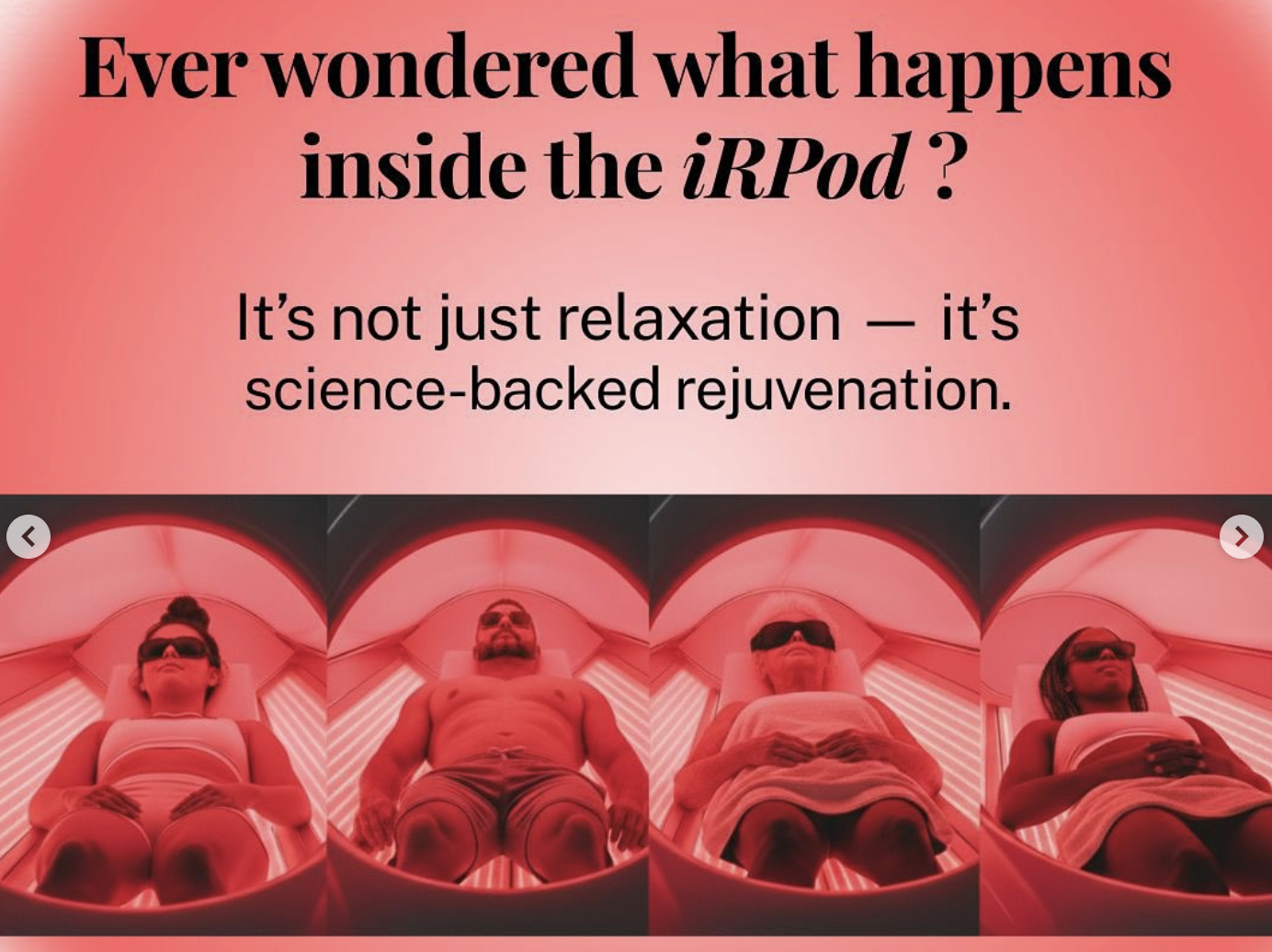
If you have tried stretching, massage, supplements, better sleep habits and still feel sore, flat or slower to recover than you should, an infra red pod can feel like the missing piece. Not because it is a miracle fix, but because it delivers something many people are not getting enough of – targeted light energy at a whole-body level, in a controlled clinical setting.
For people dealing with persistent pain, post-training fatigue, sluggish recovery, ageing skin or low energy, that matters. The right light therapy is designed to support what your body already does naturally: repair tissue, regulate inflammation, produce cellular energy and restore balance. The Future Is Here Today, and it looks a lot more advanced than a heat lamp in the corner of a day spa.
What is an infra red pod?
An infra red pod is a full-body light therapy system that surrounds the body with red and infrared wavelengths for a set treatment time, usually while you lie comfortably inside the pod. At a clinical level, this approach is often referred to as photobiomodulation, or PBM.
PBM works by delivering specific light wavelengths into tissue, where they are absorbed by cells and support key biological processes. One of the most talked-about effects is support for ATP production. ATP is the energy currency of the cell, so when production is improved, the body may be better placed to repair, recover and function efficiently.
That is the main distinction between a genuine therapeutic pod and a basic wellness gadget. A clinical pod is not about simply warming the body or creating a relaxing environment. It is about delivering light with therapeutic intent, across the whole body, at wavelengths associated with tissue support, circulation, recovery and skin health.
Why whole-body delivery changes the conversation
A lot of light therapy devices are localised. They treat one joint, one muscle group or one patch of skin at a time. That can be useful, especially if the issue is highly specific. But many people are not dealing with a single sore spot. They are dealing with broad fatigue, widespread pain, poor sleep, systemic inflammation, slow exercise recovery or a general sense that their body is not bouncing back well.
That is where a whole-body infra red pod has a clear advantage. It can expose a much larger treatment area in one session, which is particularly relevant for people with fibromyalgia, chronic fatigue syndrome, arthritis, post-surgical recovery needs or high training loads. When the burden is spread across the body, a narrow treatment approach can feel too little, too targeted and too slow.
Whole-body delivery also makes sense for people who want multiple outcomes at once. Better skin tone, less muscle soreness, improved sleep quality and a steadier mood are not unrelated. They often sit on top of the same foundational issues: stress, inflammation, recovery debt and poor cellular energy.
How an infra red pod may support pain and recovery
Pain is rarely simple. Sometimes it is acute and linked to a fresh injury. Sometimes it is chronic and tangled up with inflammation, sensitivity and long-term tissue stress. An infra red pod is not a one-size-fits-all answer, but it can be a strong non-invasive option for people who want support without adding another medication or more physical strain.
Photobiomodulation has been studied for its role in reducing oxidative stress, modulating inflammation and supporting circulation. In practical terms, that may translate to less stiffness, more comfortable movement and better recovery between activities or treatments. For some people, the biggest benefit is not dramatic pain elimination. It is being able to get through the day with less aggravation, train more consistently or wake up with less heaviness.
For sports recovery, the appeal is obvious. If your body is carrying residual fatigue after hard sessions, a whole-body treatment can support muscle recovery without adding more load. If you are coming back from an injury or operation, the conversation shifts slightly. In that setting, the goal is often to support tissue healing and comfort while your broader rehabilitation plan continues.
That trade-off matters. Light therapy should not be framed as a replacement for every other intervention. It often works best as part of a well-considered recovery or wellness strategy.
Skin, sleep and mood are part of the same story
People often first look into an infra red pod for pain or recovery, then stay for benefits they did not expect. Skin is a common example. Red light wavelengths are widely used in aesthetic and clinical settings because they may support collagen production, skin tone and a healthier-looking complexion. If you want to look better as well as feel better, that is not vanity. It is part of overall wellbeing.
Sleep and mood are just as relevant. When your system is under pressure, sleep quality often drops first. Recovery suffers, your energy dips, and your mood usually follows. Regular PBM sessions may help some people feel calmer, more settled and more restored, especially when poor sleep is linked with stress, pain or overtraining.
Results vary, of course. Someone with chronic sleep disruption from multiple causes may need a broader plan. But if your body has been stuck in a loop of soreness, tension and poor recovery, whole-body light therapy can be a practical way to interrupt that cycle.
What to expect from a clinical infra red pod session
A proper session should feel straightforward, comfortable and controlled. You lie in the pod for around 30 minutes while red and infrared light is delivered across the body. The environment should be temperature controlled, not oppressively hot, and the treatment should feel easy to tolerate.
That point is important because people often confuse infrared therapy with high-heat treatments. They are not the same thing. A therapeutic pod using photobiomodulation is focused on the biological effect of light, not just sweating or heating the body. If you do not enjoy extreme heat, that does not automatically rule this out.
Safety is one of the strongest reasons people choose this kind of therapy. It is drug-free, non-invasive and suitable for those who want a lower-risk option to support recovery and wellness. That said, suitability still depends on your health status, goals and any current treatment plan. A credible clinic will be clear about that rather than overpromising.
Why the quality of the pod matters
Not all pods are equal. The number of lights, the wavelengths used, the way the body is positioned and the consistency of delivery all influence what kind of treatment experience you are actually getting. That is one reason cheap consumer devices and generic wellness pods can disappoint. They may sound similar on paper, but the treatment strength, coverage and clinical intent can be very different.
A high-quality full-body system built around photobiomodulation is designed to do more than create a pleasant session. It aims to deliver meaningful whole-body exposure with therapeutic consistency. That matters if you are investing time and money because you want real outcomes, not just a nice half hour.
For clients in Melbourne who want a more advanced option, iRPod has positioned itself around that clinical difference, combining whole-body LED delivery with an evidence-based treatment model. For people who are tired of dabbling in therapies that only partly address the issue, that level of focus is often the reason they finally commit.
Is an infra red pod right for everyone?
Not always. If you are expecting a single session to undo years of chronic pain, fatigue or skin ageing, you will probably be disappointed. Most worthwhile outcomes build over a series of treatments. That is why many clinics recommend a course of sessions rather than a one-off visit.
It also depends on your goals. If you have a very isolated issue, a localised treatment may be enough. If your challenges are broader, or you want support across pain, recovery, skin, sleep and general wellbeing, a full-body pod makes more sense.
The best candidates are usually people who want a safe, non-invasive therapy that works with the body rather than against it. They are often looking for a practical next step, not a gimmick. They want to feel better, move better, recover better and in many cases look better too.
When a treatment can support all of that in one format, it earns attention. And when it is delivered with proper clinical intent, an infra red pod becomes more than a wellness trend. It becomes a genuinely useful tool for people who are ready to give their body better conditions to heal, recover and perform.