

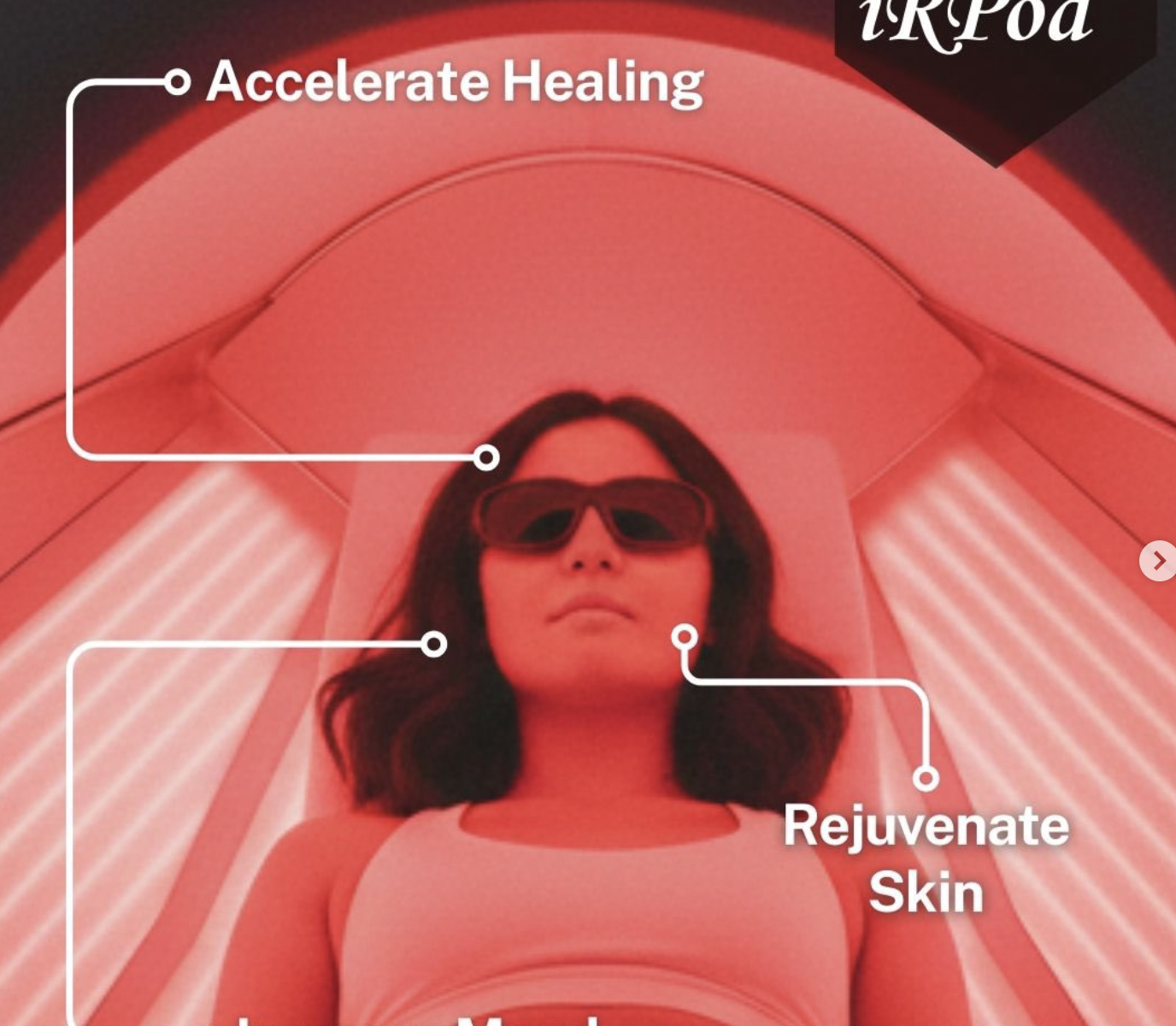
That heavy-legged, flat feeling the day after a hard session is familiar to anyone who trains properly. Sometimes it is standard muscle fatigue. Sometimes it is the start of a recovery bottleneck that drags into your next run, ride, gym session or match. Sports recovery using red light therapy is gaining attention because it targets that gap between training stress and repair in a way that is non-invasive, drug-free and grounded in photobiomodulation science.
Why sports recovery using red light therapy is getting attention
Recovery is not a luxury add-on for serious training. It is part of performance. If your body does not repair efficiently, output drops, soreness lingers, sleep quality can slide, and small niggles are more likely to become bigger problems.
Red and infrared light therapy works by delivering specific wavelengths of light to tissue, where they interact with the mitochondria inside cells. This process is often discussed in terms of ATP production, circulation support and reduced oxidative stress. In practical terms, the goal is simple: help the body recover from training load more effectively.
That does not mean one session magically erases all muscle damage or turns poor programming into good training. It means photobiomodulation may support the biological processes involved in muscle recovery, tissue repair and post-exercise inflammation management. For active adults, that can be the difference between backing up well and always feeling one step behind.
What red light therapy may actually help with after training
For most athletes and regular exercisers, the appeal starts with soreness. Delayed onset muscle soreness can blunt performance, alter movement patterns and make the next session harder than it needs to be. Red and infrared light therapy may help reduce perceived soreness and support a faster return to comfort after demanding exercise.
There is also the question of tissue stress. Training creates micro-damage by design. That is part of adaptation. The problem starts when repair cannot keep pace. Photobiomodulation has been studied for its potential to support soft tissue healing, assist local circulation and help modulate inflammatory responses. Those mechanisms matter for muscles, tendons and joints that are under repeated load.
Another reason athletes look at PBM is fatigue management. Recovery is not only about one sore quad or tight calf. It is systemic. Whole-body treatment can make sense for people doing high-volume training, playing competitive sport, or juggling exercise with work, family and poor sleep. If the body is under pressure from multiple directions, a localised treatment approach may not always be enough.
The case for whole-body treatment
This is where treatment format matters. A handheld device or small panel can be useful for a single area, especially if you are focused on one joint or one muscle group. But sports recovery is often broader than that. Hard training loads the body as a system, not just as isolated parts.
A whole-body photobiomodulation pod delivers red and infrared light across a much larger treatment area. That allows more comprehensive exposure in one session, which can be particularly valuable after full-body gym work, long endurance efforts, team sport, or periods of intense training. Instead of chasing one hot spot at a time, the treatment can support multiple regions at once.
For clients who want efficiency, that matters. A 30-minute session fits more easily into a busy week than trying to self-treat several areas individually with inconsistent positioning and dosage. It also creates a more controlled treatment environment, which is important when consistency is part of the plan.
What the science suggests, and where the limits are
Photobiomodulation is not fringe therapy. It has a long clinical history and an expanding research base across pain, healing and recovery applications. In sport and exercise settings, studies have explored outcomes such as muscle performance, fatigue, soreness and recovery markers.
The broad direction is promising, but results are not identical in every study. That is because dosage, wavelength, timing, treatment area and training type all matter. A professional athlete using a tightly managed protocol may respond differently from a time-poor office worker training three times a week. Someone recovering from a hamstring strain has different needs from someone managing general post-leg-day soreness.
That nuance is important. Red light therapy is not a replacement for load management, nutrition, hydration, mobility work or sleep. It is best viewed as a performance support tool within a bigger recovery strategy. Used well, it may help stack the odds in your favour. Used poorly, or with unrealistic expectations, it becomes just another wellness purchase with no clear plan behind it.
When to use red light therapy for sport recovery
Timing depends on the goal. Some people use PBM before training to support muscle readiness and performance. Others use it after exercise to help with soreness and tissue repair. In a recovery-focused setting, post-training and between-session treatment are often the most relevant.
If you are in a heavy block of training, regular sessions may offer more value than a one-off visit after an unusually tough workout. Recovery is cumulative, and consistency often matters more than novelty. That is why many clinics recommend treatment plans across several sessions rather than presenting PBM as a single-hit fix.
It also depends on what you are recovering from. Acute overload, minor soft tissue irritation and general training fatigue may respond differently. If there is significant injury, swelling, or an ongoing condition affecting performance, you need the right assessment and, where appropriate, coordination with your broader care plan.
Who tends to benefit most
Sports recovery using red light therapy is not only for elite athletes. In fact, a large part of its appeal is how relevant it is for everyday active adults. That includes gym-goers chasing more consistent training, runners trying to reduce downtime between sessions, cyclists managing cumulative leg fatigue, and recreational athletes who want to train hard without feeling wrecked for three days afterwards.
It can also appeal to people returning from injury, surgery or long periods of inactivity. Their challenge is often not peak performance but tolerance to load. If recovery is slow, confidence drops and progress stalls. A therapy that supports tissue healing and comfort without medication can be attractive in that phase.
For Melbourne professionals balancing work stress with early sessions, lunch-hour training or weekend sport, recovery support is often about sustainability. Looking better and performing better usually starts with feeling better, and that often comes down to how well the body recovers from repeated demand.
What to look for in a clinic
Not all red light therapy is delivered in the same way. Device quality, treatment coverage, session structure and clinical understanding make a difference. If you are considering sports recovery support, look beyond hype and ask practical questions. What wavelengths are being used? Is the treatment localised or whole-body? How long is each session? Is there a rationale for how often you should attend?
A clinic with a strong photobiomodulation focus should be able to explain the treatment clearly without overpromising. You want confidence backed by science, not vague wellness language. Safety matters too. PBM is generally well tolerated, but treatment should still be delivered in a controlled setting with proper guidance.
That is one reason whole-body pod treatment stands out. When a clinic is built around advanced PBM delivery rather than treating red light as a side offering, you are more likely to get a more consistent and clinically informed experience. At iRPod, that whole-body approach is central to the service, giving active clients a broader recovery option than narrow spot treatment alone.
The trade-off athletes should understand
The strongest recovery strategies are rarely the flashiest. They are the ones you can repeat. Red light therapy sits in that category. It is comfortable, non-invasive and easy to add to a program, but it still requires consistency and realistic expectations.
If you sleep five hours a night, under-eat, overload your program and ignore pain signals, no recovery modality will cover for that. On the other hand, if your training fundamentals are decent and you are looking for an edge in repair, soreness management and readiness, photobiomodulation is a credible option.
There is also the compliance factor. Many recovery tools are effective in theory but hard to maintain in practice. Whole-body PBM sessions are straightforward. You turn up, receive the treatment, and let the technology do the work. For busy adults, that simplicity can be a genuine advantage.
The future is here today, but the best use of it is still practical. If your body is working hard, your recovery strategy should work just as hard. A smart, evidence-based, full-body approach can help you keep moving, keep training and keep performing without relying on invasive treatments or medication-heavy pathways.
If you are curious about whether it suits your training load, your injury history or your recovery goals, the best next step is to think less about trends and more about fit. The right recovery tool is the one that helps you show up stronger for the next session, and the one after that.