

Fibromyalgia can turn ordinary days into negotiations. You might wake up sore, push through work in a fog, then find that even rest does not feel restorative. That is exactly why interest in photobiomodulation for fibromyalgia relief is growing – not as hype, but as a practical, drug-free option for people who want support beyond the usual cycle of pain, poor sleep and fatigue.
For many people with fibromyalgia, the challenge is not one isolated symptom. It is the pile-up. Widespread pain, tender points, stiffness, low energy, sleep disruption and mental fatigue often feed into each other. When the nervous system is already on high alert, even small stressors can feel amplified. A treatment approach that aims to support the body more broadly, rather than chase one symptom at a time, can make genuine sense.
Why photobiomodulation is being considered for fibromyalgia relief
Photobiomodulation, often shortened to PBM, uses specific wavelengths of red and near-infrared light to stimulate cellular activity. In plain terms, the light is absorbed by structures within cells, especially the mitochondria, which are responsible for energy production. This process is associated with improved ATP production, reduced oxidative stress and support for tissue repair and recovery.
That matters for fibromyalgia because the condition is complex. It is not simply a matter of muscle strain or inflammation in one joint. Researchers and clinicians often look at central sensitisation, altered pain processing, sleep disruption, fatigue and stress-system dysregulation as part of the picture. While PBM is not a cure for fibromyalgia, it is being explored because it may help calm some of the biological processes that contribute to ongoing discomfort and poor recovery.
There is also a practical appeal. People living with fibromyalgia are often cautious about adding another medication, increasing dosage or dealing with more side effects. A non-invasive therapy with a strong safety profile naturally attracts attention, particularly when the goal is to feel better without adding more burden.
How photobiomodulation may help with fibromyalgia symptoms
The strongest reason people consider PBM is simple – they want relief that feels noticeable in real life. Not just on paper, but when getting out of bed, concentrating at work or trying to sleep through the night.
Pain and tenderness
Red and infrared light therapy is commonly used to support pain reduction and recovery. In fibromyalgia, widespread pain can be persistent and unpredictable, so whole-body delivery may offer an advantage over therapies that only target one shoulder, one knee or one small region at a time. If pain is spread across the back, hips, legs and shoulders, a broader treatment format is often more practical.
PBM may help by influencing inflammatory signalling, circulation and cellular repair processes. That does not mean every session produces dramatic change, and it does not mean every person responds in the same way. But for some people, pain intensity and tenderness become more manageable over a course of treatment.
Fatigue and low energy
Fatigue in fibromyalgia is not ordinary tiredness. It can feel like your battery never properly recharges. Because photobiomodulation is linked to mitochondrial activity and ATP production, it is often discussed in the context of cellular energy support. That is one reason it has become relevant not only for fibromyalgia, but also for broader recovery and fatigue-focused treatment plans.
The trade-off here is timing and expectations. Some people feel more energised quickly, while others notice changes only after several sessions. If fatigue is tied strongly to poor sleep, stress or concurrent conditions, results may be slower and more layered.
Sleep and nervous system load
Poor sleep and fibromyalgia often go hand in hand. When sleep quality drops, pain sensitivity and exhaustion usually climb. PBM is not a sleeping tablet, but some clients report improved sleep quality as pain eases and the body shifts into a better recovery state. For people stuck in a cycle of discomfort and broken sleep, that can be one of the most valuable outcomes.
There is also the wider nervous system effect to consider. Fibromyalgia often comes with a sense that the body is stuck in overdrive. Therapies that are gentle, passive and non-invasive can be easier to tolerate than more aggressive interventions, especially during flare-ups.
Whole-body PBM versus local treatment
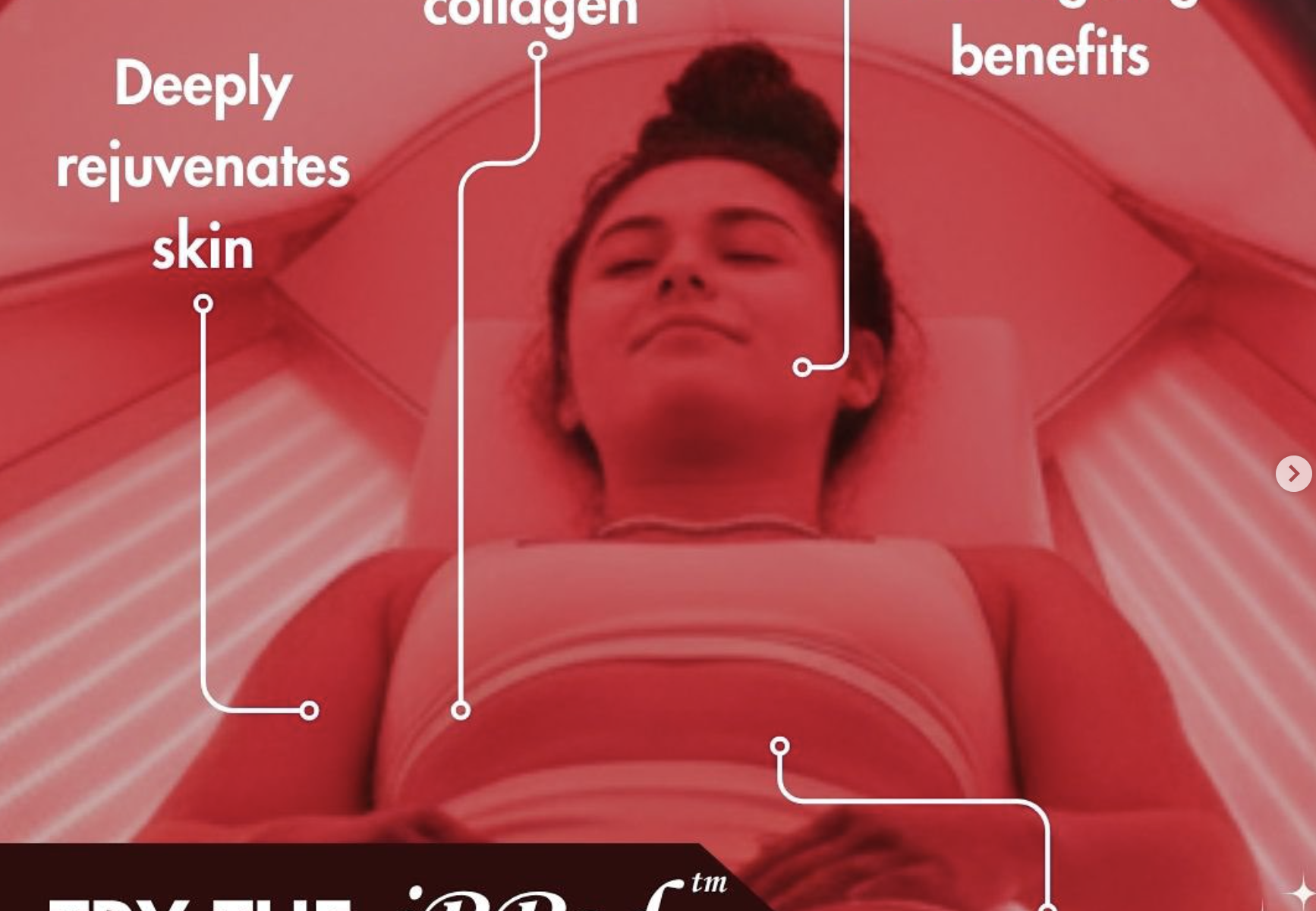
This is where delivery matters. If fibromyalgia pain is widespread, spot treatment may feel too narrow. A whole-body pod exposes much more of the body to therapeutic red and near-infrared light in a single session, which can be a better fit for a condition that rarely stays in one place.
For many clients, convenience matters almost as much as science. Spending 30 minutes in a temperature-controlled pod is very different from trying to treat multiple painful areas one by one. Whole-body treatment can support consistency, and consistency is often what determines whether someone gives a therapy enough time to work.
That is part of why clinics using advanced full-body systems have gained traction. A premium PBM setup is not just about comfort. It reflects a more comprehensive treatment philosophy – supporting pain, recovery, sleep and wellbeing at the same time.
What the evidence says, and what it does not
The evidence around PBM is promising, particularly in pain management, tissue healing and recovery, but fibromyalgia remains a nuanced area. Some studies and clinical observations suggest benefits for pain, quality of life and function. At the same time, outcomes vary because fibromyalgia itself varies. Symptom severity, duration, coexisting conditions, medication use, stress load and sleep quality all affect the response.
That is why credible clinics should avoid overclaiming. PBM is best viewed as a supportive therapy, not a miracle fix. It may reduce symptom burden, improve recovery capacity and help people function better. For some, that translates to fewer bad days. For others, it means less stiffness, better sleep or the ability to manage daily tasks with more ease.
The key question is not whether PBM is magic. It is whether it is a safe, evidence-informed option worth trialling as part of a broader management plan. For many people with fibromyalgia, the answer is yes.
What to expect from photobiomodulation for fibromyalgia relief
A session is straightforward. You lie comfortably while your body is exposed to red and near-infrared light for a set period, often around 30 minutes in a full-body system. There is no needle, no cutting, no forced pressure on painful tissues. That matters for people whose bodies are already sensitive.
Most treatment plans involve a course of sessions rather than a one-off visit. Fibromyalgia is usually chronic, so gradual improvement is more realistic than instant transformation. Some people notice a subtle shift early on, such as sleeping more deeply or feeling slightly less sore the next morning. Others need multiple sessions before they can judge whether the therapy is helping.
A sensible plan often sits in the 4 to 12 session range, depending on symptom severity and goals. If someone is dealing with persistent pain, severe fatigue and long-term sleep issues, they may need a more committed course than someone trialling PBM for mild to moderate flare management.
Who may be a good fit
Photobiomodulation can be particularly appealing if you want a non-invasive option, have widespread pain rather than one isolated injury, or are looking to complement other strategies such as movement, pacing, manual therapy or medical care. It also suits people who want support without adding to medication load.
It may be less straightforward if your symptoms are changing rapidly, if you have complex untreated medical issues, or if you expect one session to solve a long-standing condition. The best outcomes usually come when PBM is approached with realistic expectations and a bit of consistency.
For people in Melbourne seeking a more advanced whole-body approach, clinics such as iRPod have helped raise the standard of what PBM delivery can look like – combining established low level laser therapy principles with full-body LED exposure designed for comfort, safety and repeatable treatment.
Why safety and comfort matter so much in fibromyalgia
People with fibromyalgia often stop treatments not because they are ineffective, but because they are too aggressive, too inconvenient or too hard to tolerate. A therapy can be scientifically sound and still be the wrong fit if it leaves someone feeling overwhelmed.
That is where PBM stands out. It is non-invasive, generally well tolerated and easy to incorporate into a routine. When someone is already carrying chronic pain and fatigue, a treatment that feels calm, simple and manageable is not a luxury. It is part of what makes ongoing care possible.
Fibromyalgia rarely responds well to brute force. It responds better to intelligent, steady support. If photobiomodulation helps reduce pain, improve sleep or take the edge off fatigue, that shift can create room for better days – and sometimes that is exactly where meaningful progress begins.