

You can feel flat, sore and run down for weeks, yet standard options often lead straight to more medication, more waiting, or more compromise. That is why so many people now ask, how does red and infrared light therapy work, and can it genuinely help with pain, recovery, skin health and energy? The short answer is yes, but the real value sits in understanding what happens at a cellular level and why whole-body delivery can make such a difference.
How does red and infrared light therapy work at a cellular level?
Red and infrared light therapy works through photobiomodulation, often shortened to PBM. This is the process where specific wavelengths of light are absorbed by the body and trigger beneficial biological responses. It is not heat therapy in the traditional sense, and it is not the same as UV light from the sun. The goal is not to damage tissue or force a response. The goal is to support normal cellular function so the body can repair, recover and regulate more efficiently.
When red and near infrared wavelengths reach the skin and underlying tissues, they are absorbed by structures inside cells called mitochondria. Mitochondria are often described as the cell’s power producers because they generate adenosine triphosphate, or ATP. ATP is the energy currency your cells rely on to do virtually everything, from tissue repair to muscle recovery to healthy skin turnover.
When light is delivered at therapeutic wavelengths, mitochondrial activity can improve. That means more efficient ATP production, better cellular signalling and support for the body’s own healing processes. At the same time, photobiomodulation may help reduce oxidative stress and influence inflammation pathways. For someone dealing with chronic pain, fatigue, post-exercise soreness or skin ageing, that matters. It means the treatment is not masking symptoms. It is working upstream where recovery begins.
Why red light and infrared light are used together
Red light and near infrared light are often grouped together, but they do not behave in exactly the same way. Red light generally works closer to the surface, making it useful for skin tone, collagen support and superficial tissue health. Near infrared light penetrates further, which is why it is commonly used for muscles, joints, deeper tissues and broader recovery outcomes.
This combination is one reason the therapy appeals to such a wide range of people. If your concern is skin rejuvenation, red wavelengths are relevant. If your concern is joint discomfort, training recovery or lingering soreness, near infrared wavelengths may play a larger role. For many clients, the benefit comes from using both, because the body is not a set of isolated systems. Skin, circulation, inflammation, sleep quality, mood and tissue repair often overlap more than people realise.
What happens during treatment
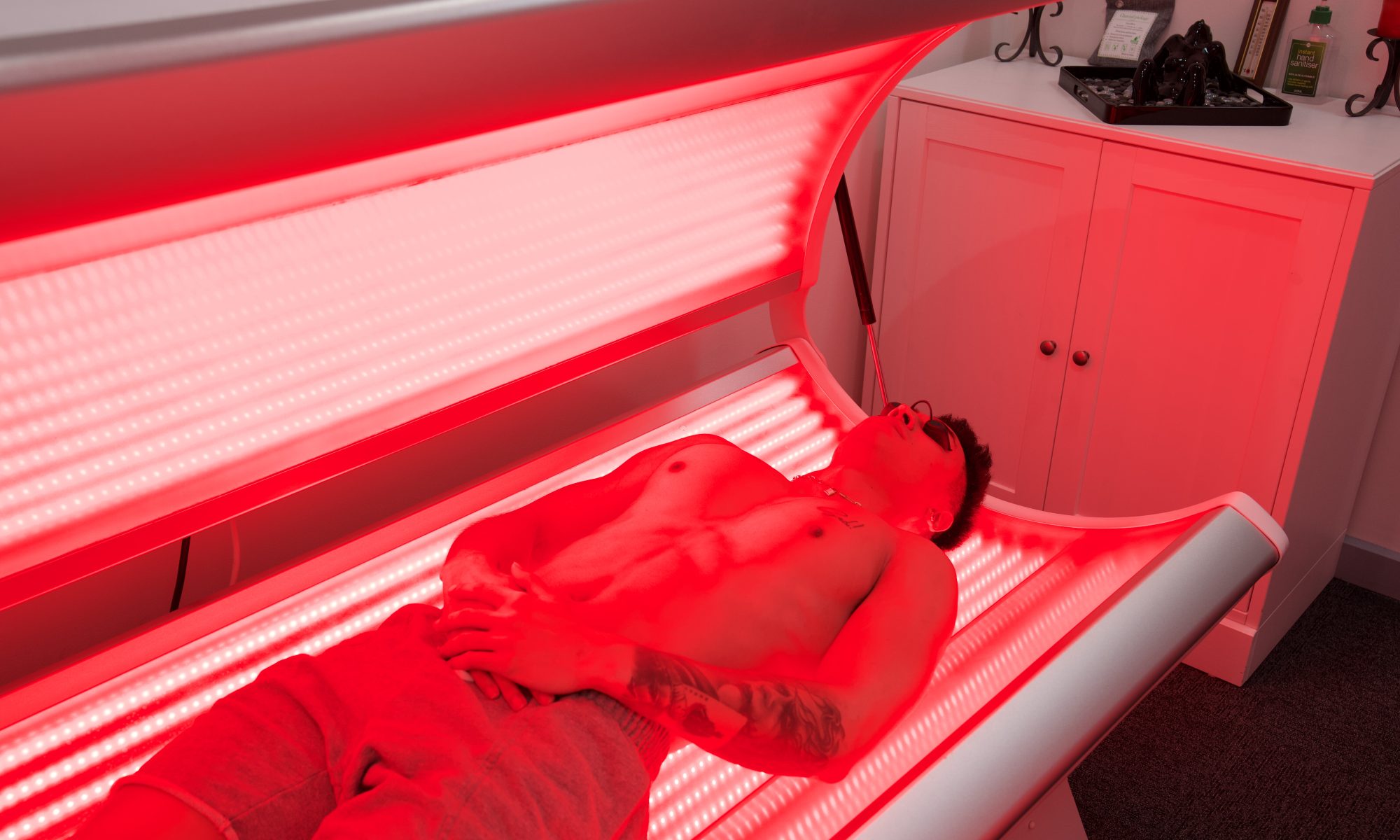
A proper treatment session is straightforward. You relax while the body is exposed to therapeutic LED light for a set period, often around 30 minutes in a clinical setting. The treatment is non-invasive, drug-free and generally comfortable. There is no need for downtime, and most people return to work, training or daily life immediately after their session.
The key variable is dosage. More light is not always better. Too little may do very little, while too much can reduce the desired effect. This is where a clinical service matters. Effective photobiomodulation relies on the right wavelengths, the right power density, the right treatment duration and the right treatment plan. That is also why people often notice stronger outcomes with repeat sessions rather than expecting everything to change after one visit.
How does red and infrared light therapy work for pain and recovery?
Pain and recovery are two of the biggest reasons people seek PBM. The mechanism is not magic. It is biology. By supporting cellular energy production and influencing inflammation, red and infrared light therapy may help tissues recover more efficiently after stress, strain or injury. Improved microcirculation can also support the delivery of oxygen and nutrients where the body needs them most.
For people living with arthritis, fibromyalgia, chronic fatigue syndrome or general musculoskeletal pain, that can translate into practical improvements. You may feel less stiffness, better mobility, reduced post-activity flare-up and a more manageable baseline. For active people, it can mean less soreness after training, faster turnaround between sessions and better consistency in performance.
It is worth being clear, though. Results vary. Chronic conditions are complex, and no reputable clinic should promise a cure. The stronger claim, and the more clinically responsible one, is that photobiomodulation can be a valuable support therapy within a broader recovery or wellness plan.
Skin, sleep and mood benefits are part of the same story
People often separate beauty outcomes from health outcomes, but light therapy does not really work that way. The same cellular processes that support tissue repair can also support skin rejuvenation. Better cellular energy and improved circulation may help with collagen production, skin texture and overall skin appearance. That is why red light is popular among clients who want a fresher, healthier look without invasive procedures.
Sleep and mood also come into the conversation for a reason. When pain eases and recovery improves, sleep often follows. Some clients also report a noticeable lift in general wellbeing after a series of sessions. There is growing interest in how PBM may support nervous system regulation and reduce the physiological drag that comes with stress, poor recovery and persistent inflammation. It is not a shortcut to perfect health, but it can be part of getting the body out of a constant state of strain.
Why whole-body treatment changes the equation
This is where treatment design matters more than most people think. Small, localised devices can be useful for targeted areas, but they have limitations. If someone has a sore knee, local treatment may be enough. If someone has widespread pain, systemic fatigue, post-surgical recovery needs or a combination of skin, sleep and recovery goals, whole-body delivery can offer a broader therapeutic reach.
A whole-body PBM pod exposes far more of the body to clinically relevant light in a controlled setting. That matters for people who are not dealing with one isolated issue. It also matters for efficiency. Rather than chasing multiple areas one by one, you can deliver treatment across a large treatment area in a single session.
For a clinic like iRPod, that whole-body approach is a defining advantage. It allows clients to access advanced photobiomodulation in a format designed for real-world recovery, not just spot treatment. If your symptoms are widespread or your goals are broader than one painful patch, the delivery method is not a small detail. It is central to the result.
Who tends to benefit most?
Adults looking for non-invasive support are usually the strongest fit. That includes people managing chronic pain, fatigue, joint discomfort, slow recovery, ageing skin, post-surgical healing and sports recovery demands. It also suits busy professionals who want an evidence-based therapy that supports how they feel and function without adding another medication to the mix.
That said, suitability still depends on the person. Health history matters. Treatment goals matter. The severity and duration of symptoms matter. Some people feel a shift quickly, especially with soreness, sleep or skin brightness. Others need a structured course of sessions before changes become clear. Photobiomodulation is often cumulative, which is why treatment plans commonly recommend multiple sessions over several weeks.
What red and infrared light therapy does not do
Strong clinics are clear about the boundaries. This therapy is not a miracle fix, and it should not be sold as one. It does not replace emergency care, surgery when surgery is needed, or proper medical assessment for serious symptoms. It is also not the same as sun exposure, tanning or a beauty fad with no clinical basis.
What it does offer is a safe, established and scientifically grounded treatment option that supports the body’s own repair and regulatory systems. For many people, that is exactly the point. They are not chasing hype. They want something non-invasive, credible and practical that helps them look better, feel better and perform better.
If you have been weighing up whether red and infrared light therapy is worth trying, the smartest way to think about it is this: the treatment gives your cells the conditions to function better, and better cellular function can lead to better recovery, less discomfort and healthier-looking tissue over time. Sometimes the biggest shift in wellbeing starts with giving the body the right signal and enough consistency to respond.