

The hard part of training is not always the session itself. It is backing up tomorrow with legs that are not trashed, a shoulder that settles down, and energy that holds through a full workday as well as a hard block of exercise. That is exactly why red light therapy for athletes is getting serious attention. Not as a gimmick, and not as a magic shortcut, but as a non-invasive recovery tool that may help the body repair, restore and perform better.
For active people, recovery is where progress is either protected or lost. If you are training consistently, playing weekend sport, returning from injury, or simply trying to stay strong without carrying constant soreness, photobiomodulation deserves a closer look.
What red light therapy for athletes is actually doing
Red and near-infrared light therapy works by delivering specific wavelengths of light into tissue. This process is known as photobiomodulation, or PBM. The goal is not to heat the body like a sauna or shock the system like an ice bath. It is a cellular treatment designed to support how the body naturally recovers.
At a basic level, these wavelengths are understood to interact with mitochondria, the part of the cell involved in energy production. That may help support ATP production, which matters because ATP is the usable energy cells rely on for repair and function. PBM is also associated with helping regulate oxidative stress and supporting circulation, both of which are relevant when tissues are under load from training.
For athletes, that matters in practical terms. Muscle fatigue, post-session tightness, inflammatory responses, tendon irritation and poor recovery all have a cellular component. If recovery improves at that level, the visible result may be less soreness, better movement quality and a stronger ability to train again sooner.
Where the benefits may show up first
Most active clients are not looking for a lecture on cellular biology. They want to know whether they will feel a difference. Often, the first noticeable changes are recovery-related.
Soreness and training load
Delayed onset muscle soreness can blunt performance for days, especially when life outside training is already busy. Red and infrared light therapy may help reduce the intensity and duration of soreness after heavy sessions. That does not mean you will never feel hard training again. It means the rebound may be smoother, and that can make consistency easier.
Soft tissue support
Athletes frequently deal with niggles rather than dramatic injuries. Tight calves, irritated knees, cranky shoulders and overloaded lower backs sit in that frustrating middle ground where you can still move, but not at your best. PBM is commonly used to support tissue healing and pain reduction, which is why it appeals to people trying to stay active while managing overuse issues.
Sleep and readiness
Recovery is not just about muscles. Poor sleep drags down output, motivation, reaction time and resilience. Many people pursuing red and infrared therapy are also trying to improve sleep quality and general wellbeing. That broader recovery effect can be just as valuable as the local tissue response, especially for athletes balancing training with work, parenting and daily stress.
Does the research support it?
The short answer is yes, but with context. The evidence around photobiomodulation is promising, particularly in areas such as muscle performance, recovery, pain reduction and tissue repair. It has been studied for decades and is not a fringe concept. That said, outcomes depend on dose, wavelength, timing, treatment area and treatment consistency.
This is where many people get confused. They hear that red light therapy works, buy a small panel or use an underpowered device a handful of times, then wonder why the result is underwhelming. PBM is not just about exposure to red light in a vague sense. It is about delivering the right wavelengths at the right intensity and for the right duration.
That is also why full-body systems can be appealing for active clients. Sport does not only stress one isolated point. Training load affects muscles, connective tissue, circulation, nervous system regulation and recovery capacity more broadly. A whole-body treatment can better match that reality than trying to chase one sore spot at a time.
Why treatment format matters more than people think
Not all red light therapy is equal. Some systems are built for localised use on a small area. Others are designed to deliver broad, whole-body coverage. For athletes, that difference can be significant.
If you are dealing with one specific issue, such as an ankle or elbow, a targeted treatment may make sense. But if your goal is overall recovery, reduced muscle fatigue, better sleep and support across multiple areas under load, broader delivery has clear advantages. It is more efficient, and it reflects how athletes actually use their bodies.
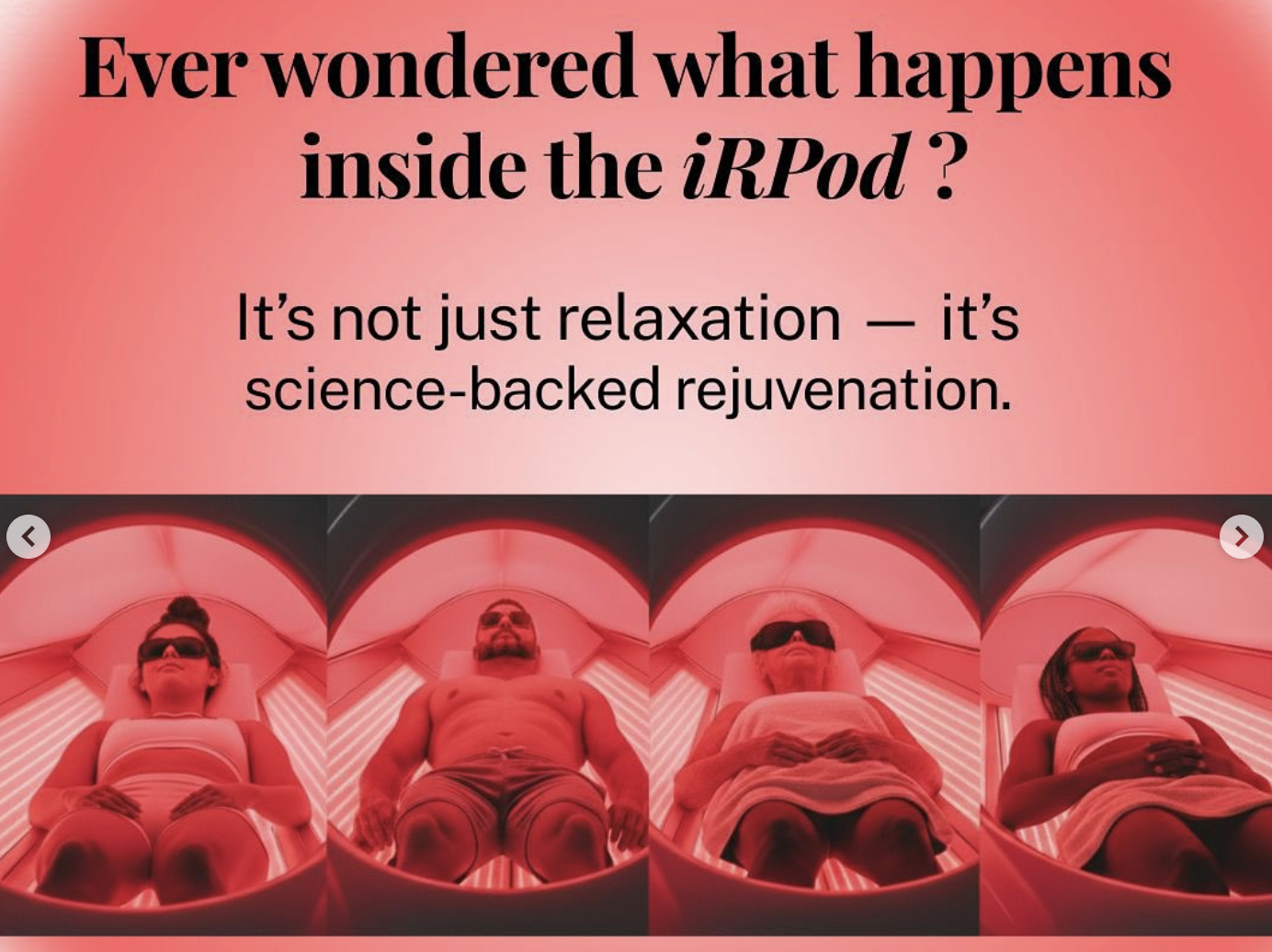
At clinics using advanced PBM pods, clients can receive treatment through thousands of temperature-controlled lights across the full body in a single session. That kind of setup is built for people who want a serious recovery intervention rather than a novelty wellness add-on. In a market full of devices making big claims, that distinction matters.
When athletes tend to use it
There is no single perfect schedule for everyone, because training demands vary. A recreational runner preparing for an event has different needs to a gym-goer lifting four times a week, and both differ from someone returning after surgery or a sports injury.
Some athletes use red light therapy before training blocks with the aim of supporting performance and readiness. Others use it after training to help recovery and soreness. Many do best with a structured course over several sessions, especially when there is a clear issue they are working through. Like most evidence-based recovery therapies, consistency usually outperforms one-off use.
If you are already pushing through fatigue, carrying inflammation, or trying to stay active while managing pain, expecting a single session to solve everything is unrealistic. The better question is whether repeated treatment can support measurable improvement over time. In many cases, that is where PBM becomes genuinely useful.
Who is most likely to benefit
Red light therapy for athletes is not only for elite sport. In fact, it may be most valuable for people who train hard while also living full, busy lives.
That includes runners, cyclists, gym members, tennis players, footballers, swimmers and people doing regular strength or high-intensity training. It also includes older active adults who recover more slowly than they used to, and people returning to exercise after injury, surgery or a long period of inconsistency.
There is also a practical benefit for those who want a drug-free option. If you are trying to avoid leaning too heavily on pain medication or anti-inflammatories just to keep moving, PBM can sit well within a broader recovery plan that values safety and non-invasive care.
What it can and cannot do
This is where a bit of honesty matters. Red light therapy can be powerful, but it is not a replacement for smart programming, quality sleep, good nutrition, physiotherapy when needed, or proper medical advice. If your load management is poor, your technique is off, or you are ignoring a more serious injury, PBM will not erase that.
What it may do is improve the environment for recovery. It can help support healing, reduce pain, and make it easier to maintain momentum. For some athletes, that means recovering faster between sessions. For others, it means being able to train with less discomfort. And for plenty of people, it simply means feeling more ready, more mobile and less worn down.
The trade-off is that results are individual. Some people notice change quickly. Others improve more gradually, particularly if they are carrying long-standing inflammation, fatigue or complex pain patterns. That does not make the therapy less legitimate. It just means expectations should be grounded in how recovery really works.
A smarter way to think about performance support
Performance is not only built in the gym, on the track or on the field. It is built in what happens after. The athletes who keep progressing are usually the ones who recover well enough to train well again.
That is why therapies grounded in safety, science and repeatable outcomes are earning a permanent place in modern recovery. At an established PBM clinic such as iRPod in South Yarra, the appeal is not hype. It is the combination of whole-body technology, clinical credibility and a treatment experience that fits real life.
If your body is asking for better recovery, listen early. It is much easier to support performance when you are still moving forward than when soreness, fatigue and pain have already taken over.